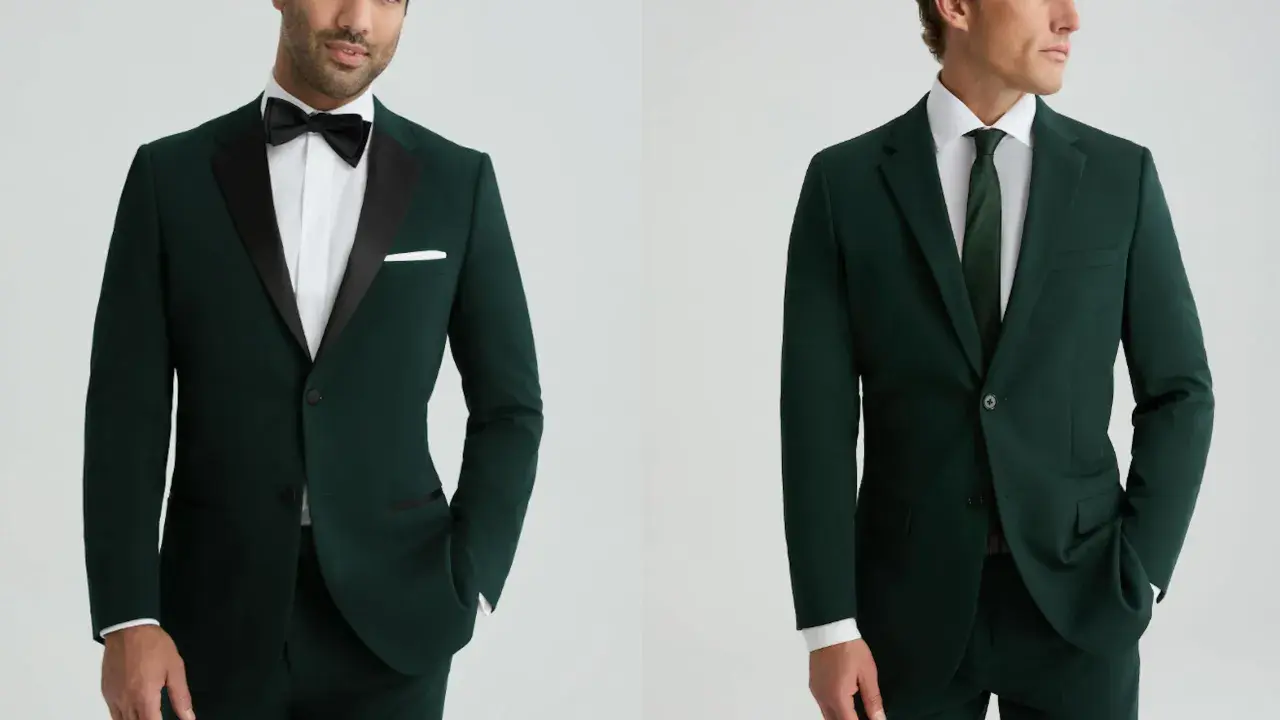
The practical difference is formality, not just fabric
- Black tie calls for a dinner jacket, not a standard business suit.
- A suit is more versatile and works for weddings, work, dinners, and daytime events.
- The visual cues are clear: satin or grosgrain lapels, braid on the trousers, and a bow tie point to a dinner jacket.
- In the UK, “tuxedo” is usually the American term; “dinner jacket” is the more natural British one.
- If you only buy one outfit first, a dark suit usually earns its keep faster.
How a dinner jacket differs from a suit
I think of a dinner jacket as a specialist evening uniform and a suit as the dependable all-rounder. The tuxedo and the suit can both look sharp, but they are built for different levels of formality, and that difference shows up in the details rather than the overall silhouette. A proper dinner jacket has a more ceremonial feel, while a suit is designed to move between meetings, weddings, dinners, and smarter day events without looking out of place.
In British dress codes, the split is even clearer. A dinner jacket sits inside black tie; a suit belongs to lounge suit or business-smart territory. That is why a black suit is not the same thing as black tie, even if it is dark enough to fool the eye from a distance.
| Detail | Dinner jacket | Suit |
|---|---|---|
| Purpose | Evening formalwear for black tie events | General tailored wear for business and social occasions |
| Jacket finish | Satin or grosgrain lapels, usually with a more polished look | Matte cloth, usually with notch or peak lapels and no satin trim |
| Trousers | Matching trousers, traditionally with a silk braid on the side | Matching trousers in the same cloth, usually without braid |
| Shirt and tie | White evening shirt and bow tie | Dress shirt with a necktie; sometimes open-neck in relaxed settings |
| Colour | Black or midnight blue; cream only in very specific settings | Navy, charcoal, grey, and other suit-appropriate shades |
| Shoes | Highly polished black formal shoes, often patent leather | Black or dark brown leather shoes depending on the suit and occasion |
| Best use | Black tie dinners, galas, formal weddings, opera, awards nights | Work, interviews, wedding guest wear, dinners, receptions, and most smart events |
The biggest giveaway is not just the satin; it is the whole system around the outfit. Once you see that, choosing becomes much easier, because the event itself starts to dictate the answer.
Which occasions call for each one in the UK
In the UK, dress codes still matter, and I would treat the invitation as the first source of truth. If it says black tie, the correct response is a dinner jacket. If it says lounge suit, a suit is the right choice. That sounds simple, but it saves a lot of awkward over- or under-dressing.| Invitation wording | Best choice | Why it works |
|---|---|---|
| Black tie | Dinner jacket | This is the intended uniform for evening formalwear. |
| Black tie optional | Dinner jacket if you own one; dark suit if you do not | You have room to choose, but the dinner jacket is still the stronger interpretation. |
| Lounge suit | Suit | This is the standard British business-and-social suit code. |
| Smart attire or cocktail attire | Suit, usually in a darker tone | Formal enough to show effort, but not so formal that you look like you misread the room. |
| Wedding without a strict dress code | Suit for most guests; dinner jacket only if the event clearly leans black tie | The host’s tone matters more than your personal preference. |
For weddings, I usually advise reading the room and the venue together. A city hotel in the evening often justifies a darker, sharper look than a daytime country wedding, while a stately-home reception may explicitly lean into black tie. If the invitation is vague, I still prefer the more conservative option: a well-cut suit beats an outfit that looks technically impressive but socially misplaced.
That same logic applies to formal dinners, charity galas, and theatre evenings. A dinner jacket earns its place when the event is deliberately formal after dark; a suit is the safer answer when the occasion is polished but not ceremonial. If the code is unclear, ask the host rather than guessing.
Once the occasion is clear, the next job is making sure the outfit itself looks intentional rather than borrowed.
How to wear them so the outfit reads correctly
Most men do not get black tie wrong because the jacket is bad; they get it wrong because one or two details fight the dress code. The same is true of suits. Fit matters, but so do shirt collar shape, shoe choice, tie width, and how much visual noise you add around the core outfit.
For a dinner jacket
Keep the formula disciplined. I prefer a crisp white evening shirt, a black bow tie, and black formal shoes with a clean shine. A low-profile waist covering, such as a cummerbund or low-cut waistcoat, can work well, but I would not stack both together. The look should feel quiet, sharp, and deliberate.
Accessories should stay restrained. A pocket square can be white and neat, but I would avoid loud colour or novelty folds. On the wrist, a slim dress watch on a black leather strap is the safest choice; a chunky sports watch tends to break the mood. If the event is very traditional, skipping the watch entirely is often the cleaner move.
Read Also: Pinstriped Tuxedo - Your Guide to Sharp, Modern Black Tie
For a suit
A suit gives you more room, but that freedom is easy to waste. A white or light-blue shirt is the dependable base, and a tie should usually do some of the work that the dinner jacket does for black tie: adding texture, structure, and a sense of purpose. Navy and charcoal suits benefit from black or dark brown leather shoes, depending on the shade and the event.
This is where many men overcomplicate things. They chase novelty instead of proportion. A good suit looks best when the shoulders sit correctly, the jacket closes cleanly, and the trouser break is controlled. I would rather see a modest suit altered properly than an expensive one hanging awkwardly off the body.
If you want one simple rule, use this: the more formal the outfit, the fewer distractions it should carry. That leads naturally into the wardrobe question, because most men are not choosing only for tonight.
Which one belongs in your wardrobe first
If you only plan to buy one, I usually recommend starting with a dark suit. It covers more ground, it is easier to re-wear, and it can work for interviews, weddings, dinners, funerals, and most smart occasions without looking forced. A navy or charcoal suit in a good wool cloth is hard to beat for value.
A dinner jacket becomes worth buying when your calendar regularly includes black-tie events, formal winter weddings, charity galas, or club dinners where the dress code is predictable. If those events are rare, hiring a dinner jacket can make more sense than owning one that spends most of its life in a garment bag. I would rather own one excellent suit than a second-rate formal set that only appears once every few years.
- Buy a suit first if you need one outfit for work and social life.
- Buy a dinner jacket first if black tie is genuinely part of your routine.
- Choose made-to-measure or tailoring before chasing a premium label.
- Keep the first suit dark and versatile rather than fashion-forward.
- Invest in shoes and alterations; they change the result more than a louder fabric ever will.
In practice, the smartest wardrobe is often built in this order: one excellent suit, then a dinner jacket once your social calendar justifies it. That sequence keeps money where it matters and avoids owning the wrong level of formality for the events you actually attend.
The rule I trust when the invitation is vague
When the dress code is not explicit, I use a simple hierarchy: black tie means dinner jacket; lounge suit means suit; anything ambiguous should be answered with the darker, cleaner, more conservative option. That does not mean dull. It means controlled, respectful, and suited to the room.
If you remember only one thing, remember this: a dinner jacket is for evening formality, and a suit is for almost everything else. Get that distinction right and the rest of the outfit becomes much easier to build, from shirt to shoes to watch. In a country like the UK, where dress codes still carry real weight, that judgment is often what separates looking well turned out from looking merely dressed up.