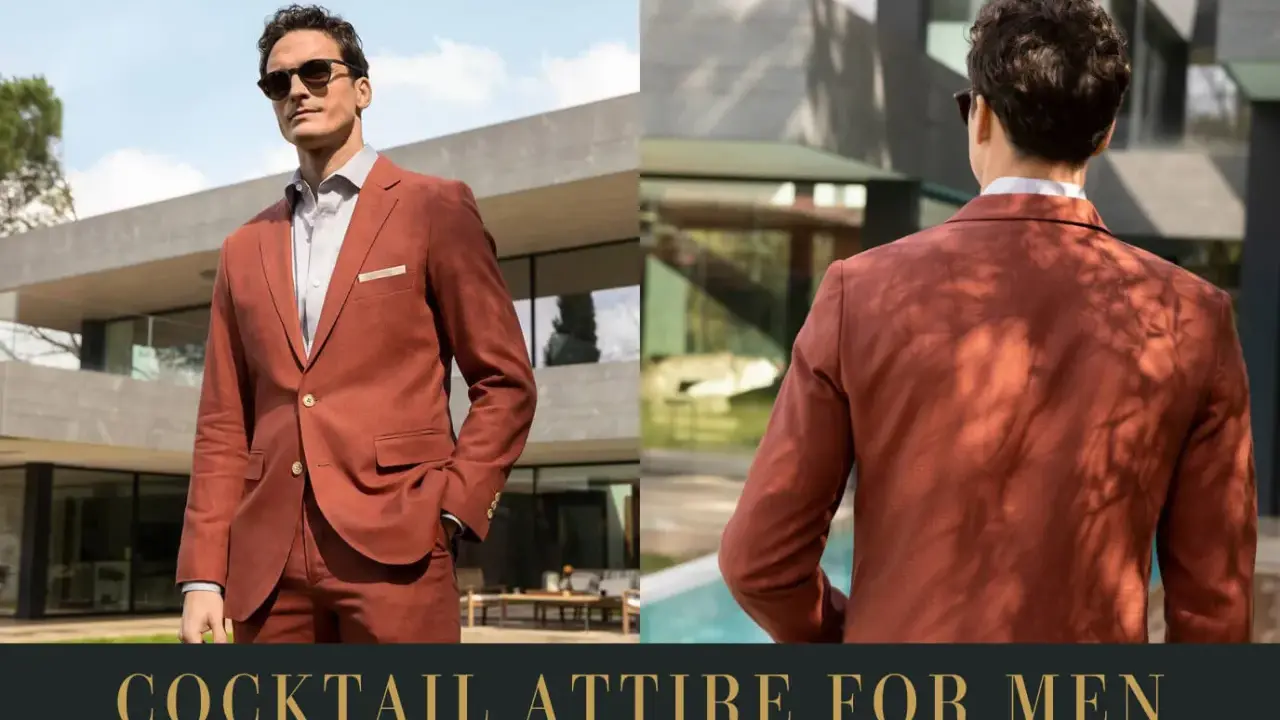
The safest cocktail look is tailored, polished, and restrained
- A dark or mid-tone suit is the safest starting point for most UK cocktail events.
- White and pale blue shirts are the easiest to wear well; loud patterns are harder to pull off.
- Leather shoes matter more than most men think: Oxfords are safest, Derbies and loafers are slightly softer.
- Fabric should match the room and season, so lighter wool or hopsack works better in warmer settings.
- If the invitation is vague, dress one step smarter than you think you need to.
What cocktail attire means in practice
Cocktail attire is semi-formal, but that label hides a lot of variation. In practice, it usually means the host wants you to look dressed for an evening event without moving all the way into black tie, and in the UK that normally points to a suit rather than trousers and a shirt alone.| Dress code | What it usually means | Best use |
|---|---|---|
| Smart casual | Shirt or knitwear, chinos, relaxed blazer | Casual dinners and daytime meet-ups |
| Cocktail attire | Suit or tailored separates, dress shirt, polished shoes | Weddings, receptions, evening parties |
| Black tie | Tuxedo, bow tie, formal evening dress | Gala events and highly formal evenings |
That middle ground is where judgement matters. If the venue feels elegant, the dinner is in the evening, or the invitation mentions a wedding or reception, I would lean towards proper tailoring rather than trying to “interpret” the dress code creatively. Once you accept that, the outfit itself becomes much easier to build.
The outfit formula that works most often

My default formula is simple: a well-fitted suit, a plain shirt, smart leather shoes, and one or two restrained accessories. It sounds obvious, but most men go wrong by adding too many ideas at once, or by choosing pieces that are individually fine but wrong together.
| Item | Safest choice | Why it works | What to avoid |
|---|---|---|---|
| Jacket | Single-breasted, two-button navy or charcoal suit | Looks polished without feeling severe | Shiny fabric, loud checks, casual sports jackets |
| Trousers | Matching suit trousers with a clean break | Keeps the silhouette deliberate | Jeans, cargo pockets, overly cropped hems |
| Shirt | White or pale blue, crisp collar | Sharpens the whole look | Large prints, dark casual shirts, visible logos |
| Shoes | Black Oxfords or dark Derbies | Anchors the outfit properly | Trainers, chunky soles, worn suede in bad weather |
| Extras | Simple tie, pocket square, slim watch | Adds character without noise | Too many accessories competing for attention |
Fit matters as much as fabric. A jacket should sit cleanly on the shoulders, the sleeves should show a sliver of shirt cuff, and the trousers should fall without bunching at the ankle. If the cloth is wrong or the fit is off, the entire outfit reads less formal even if every piece is expensive. For warmer rooms, I often prefer tropical wool or hopsack because both breathe better than a heavy winter suit; tropical wool is a lighter weave, while hopsack has a slightly open texture that gives the fabric more life.
That formula gives you a safe base, but the shirt, shoes, and finishing details decide whether the look feels sharp or bland.
How to choose the shirt, shoes, and accessories
The shirt is where people overcomplicate things. For cocktail attire, a clean white shirt is the hardest option to beat because it works with almost every suit colour and keeps the outfit crisp. Pale blue is the next easiest choice, especially if you want a slightly softer look.
The shirt
I would keep the collar straightforward: point or semi-spread collars are the easiest to wear. A cutaway collar can work, but only if the tie knot is balanced and the shirt is genuinely formal. A subtle weave or very fine stripe is fine; anything louder begins to fight the occasion.
The shoes
Shoes do more than finish the outfit. They decide how formal it feels. Oxfords are the cleanest option and safest for weddings or more traditional events. Derbies are a touch less rigid and can be easier if the event sits closer to smart tailoring than formalwear. Loafers work well for summer or more relaxed cocktail events, especially in the UK where the invitation is often social rather than ceremonial. Chelsea boots can also work in colder months, provided they are sleek rather than chunky.
- Black leather is the most formal and easiest to pair with charcoal or navy.
- Dark brown leather can work very well with navy or mid-grey, especially for evening drinks.
- Suede is useful in dry weather, but I would be cautious if the venue is outdoors.
- Trainers are the wrong signal unless the host has explicitly made the event casual.
Read Also: Christmas Party Outfit: Dress Smart, Not Overdressed
The accessories
Accessories should refine the look, not dominate it. A belt should match the shoes as closely as possible. A pocket square is optional, but it can lift a plain suit if the colour is restrained. A tie should be elegant rather than loud: silk is the default, while a knitted tie brings a softer texture that can work at less formal evening events.
Because this is Daosmoda territory, I would also keep the watch disciplined. A slim dress watch is the most natural choice; a chunky sports watch can feel out of place unless the rest of the outfit is deliberately relaxed. Once the core pieces are right, the next question is how much the venue and season should change your choices.
How to adapt the look to the event and the weather
Cocktail attire is not identical at every event. A city wedding, a country-house reception, and a late-night drinks party all ask for the same level of polish, but not the same fabric weight or styling. That difference matters more than most men expect.
| Scenario | Best approach | Why |
|---|---|---|
| Wedding reception | Dark navy or charcoal suit, white shirt, tie, leather Oxfords | Most traditional and least risky |
| Restaurant or hotel bar | Suit or tailored blazer with matching trousers, polished Derbies or loafers | Sharp without feeling ceremonial |
| Summer rooftop or garden event | Lighter wool, hopsack, or linen-blend suit, pale shirt, loafers | Keeps structure while handling heat better |
| Autumn or winter venue | Heavier wool, darker palette, Chelsea boots or Derbies | Feels appropriate and practical in cooler weather |
For British weather, I would always think about the journey as well as the room. If you will be outside, on grass, or moving between buildings, avoid delicate fabrics and overly light soles. If the event is indoors and heated, a denser cloth can be comfortable, but a lighter weave may be more practical if you run warm. The goal is not to dress for the most dramatic version of the dress code; it is to look composed in the actual setting.
That is also why the wording on the invitation matters. “Cocktail” can mean slightly different things depending on whether the host expects a proper evening look or a more relaxed, sociable interpretation. Knowing the difference helps you avoid the most common mistakes.
Mistakes that make the dress code miss
The biggest error is not choosing the wrong colour; it is mixing incompatible signals. A good cocktail outfit should look edited. If one piece says “formal,” another says “weekend,” and a third says “night out,” the whole thing loses authority.
- Going too casual with jeans, chinos that read like office wear, or trainers.
- Going too formal with a tuxedo or bow tie when the host asked for cocktail attire, not black tie.
- Choosing loud fabrics that look flashy rather than refined.
- Ignoring fit so the jacket pulls, the shoulders collapse, or the trousers puddle at the shoe.
- Over-accessorising with a busy tie, bold pocket square, bracelet, ring, and oversized watch all at once.
- Using the wrong shoes because the rest of the outfit is neat and you assume footwear will not matter.
There is a finer point here as well: cocktail attire should feel confident, not self-conscious. If you look as though you spent all evening trying to prove your taste, the outfit has already gone too far. I would rather see one strong idea executed cleanly than five competing ideas fighting for attention.
When in doubt, the simplest answer is usually the strongest one.
The safest fallback when the invitation gives you nothing to work with
If I had to dress in ten minutes and the invitation gave me almost no detail, this is the formula I would choose:
- A navy or charcoal suit with a clean silhouette.
- A white shirt with a straightforward collar.
- Black Oxfords or very polished dark Derbies.
- A plain silk tie, with a pocket square only if the rest of the outfit is calm.
- A slim, understated watch and nothing else that competes for attention.
That combination is unlikely to fail at a UK cocktail event because it sits exactly where the dress code lives: more formal than smart casual, less rigid than black tie, and flexible enough to handle weddings, receptions, dinner parties, and evening drinks. If the host has a clearly relaxed personality, you can soften it by removing the tie or choosing loafers, but I would only do that when the setting clearly supports it. The safest version of cocktail attire is rarely the flashiest one; it is the one that looks considered from the moment you walk in.