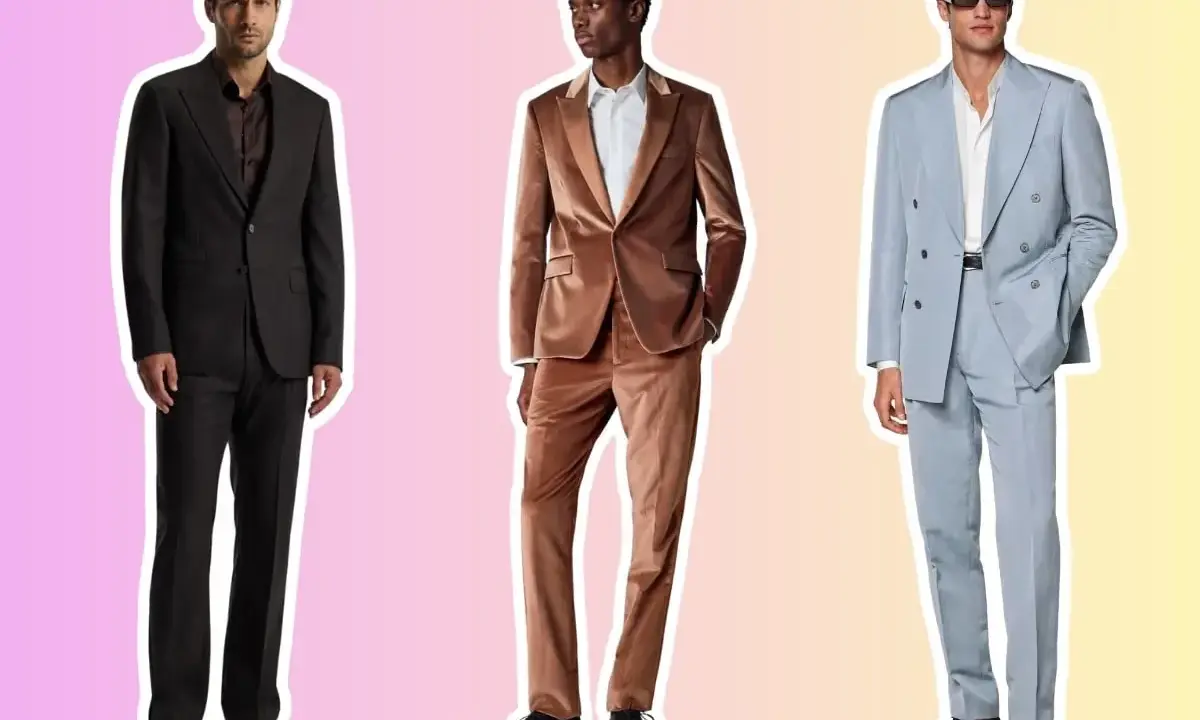
The safest cocktail look is structured, polished, and slightly more expressive than office tailoring
- Start with a suit unless the invitation or host clearly says the event is relaxed.
- Navy, charcoal, and midnight blue are the easiest colours to wear well in the UK.
- A white or pale blue shirt keeps the outfit clean; a tie is usually the safest default for evening events.
- Leather shoes matter more than people admit: polished loafers, derbies, or oxfords will elevate everything else.
- One interesting detail is enough, whether that is a textured jacket, a silk tie, or a strong watch.
- Jeans, trainers, and business-casual shortcuts usually drag the look below the dress code.
What cocktail attire means in practice
The phrase sounds loose, but in real life it usually asks for one thing: an evening-ready outfit that looks intentional. In the UK, that often means a suit or at least suit-like tailoring, especially for weddings, formal birthdays, gallery events, and private dinners. The point is not to look severe; it is to look like you understood the occasion.
I find it helpful to think of cocktail dress as a controlled upgrade. You are not dressing for the office, and you are not dressing for the most formal end of the spectrum either. That is why the outfit can be slightly more expressive than usual, but it still needs structure, polish, and restraint. If the invitation is vague, I would always err on the smarter side first and relax later only if the setting clearly allows it.
That balance is what makes the dress code useful and mildly tricky at the same time, so the next step is figuring out the simplest formula that rarely fails.
The outfit formula that rarely fails
If I had to reduce cocktail dressing to a single formula, it would be this: a well-fitted suit, a clean shirt, proper shoes, and one thoughtful detail. Everything else is optional. The fit is doing most of the work, which is why an expensive suit that hangs badly can look worse than a cheaper one that has been altered properly.
The jacket and trousers
For most men, a two-piece suit is enough. Navy, charcoal, and midnight blue are the safest choices because they read as formal without becoming dour. In colder months, I like wool, flannel, or a subtle herringbone because they add depth without shouting. In warmer weather, a lighter wool or a wool-linen blend can work, provided the fabric still holds its shape.
A velvet jacket can be excellent for an evening cocktail event, but it is a deliberate choice, not a default. I would reserve it for more glamorous venues, winter receptions, and occasions where a little drama is welcome. If you are not used to wearing texture, keep the rest of the outfit quiet so the jacket has room to breathe.
The shirt
A white shirt is still the easiest answer. A pale blue shirt is the next safest option if you want a softer look. I would keep the collar crisp and the fabric smooth, with poplin or a fine twill working best for most events. If the shirt is too heavy, too shiny, or too patterned, it starts competing with the rest of the outfit instead of supporting it.
For a more relaxed cocktail invitation, a fine-gauge roll neck can work under a jacket in autumn or winter. It looks modern, but only when the rest of the outfit is disciplined. I would not use it as a shortcut for being underdressed.
The shoes
Shoes are where a lot of men get caught out. For cocktail dress, polished leather is the benchmark. Black derbies or oxfords are the most conservative and safest choice. Dark brown loafers can look excellent with navy or grey tailoring if the event is not overly formal. Chelsea boots also work well in cooler months, especially if the venue is urban and the outfit has some texture.
I would avoid sneakers in most cases, even very clean ones. They can work only when the host has made the event explicitly relaxed and the outfit is otherwise smart enough to hold its own. If you are unsure, shoes should tilt elegant rather than clever.
Read Also: Formal Dinner Dress Code UK - What to Wear & Why
The finishing touches
Accessories should sharpen the look, not clutter it. A silk tie, pocket square, and good watch are usually enough. If you want to make one statement, let it be the tie or the jacket texture, not both. Cufflinks, a subtle tie bar, or a neatly folded pocket square can all help, but each should feel like punctuation rather than decoration.
That formula sounds simple because it is, and simplicity is usually what keeps cocktail dressing from tipping into costume. The next question is how to adjust that formula for the actual event in front of you.
Outfit combinations I’d actually recommend
Examples are useful here because cocktail dressing is easier to judge when you can see the logic behind the choices. These are the combinations I would trust most often in the UK, depending on the setting.
- Navy suit, white shirt, black oxfords, silk tie - This is the cleanest all-round option. It works for weddings, formal dinners, and most evening events because it feels polished without being stiff.
- Charcoal suit, pale blue shirt, dark brown derbies, pocket square - Slightly softer than navy, but still very safe. I like this for corporate receptions and winter events where you want to look considered rather than flashy.
- Midnight blue suit, white shirt, black loafers, textured tie - A good choice when you want a little depth and a little personality. The colour reads rich under evening lighting, which is why it often feels more elevated than plain navy.
- Velvet jacket, black trousers, white shirt, black loafers - Best for more glamorous rooms, especially in autumn and winter. The texture does the talking, so I would keep the shirt and trousers quiet.
- Lightweight grey suit, pale blue shirt, brown loafers - Better for daytime cocktail events, summer weddings, and garden settings. It feels lighter and more seasonal, but it still needs sharp tailoring to avoid drifting into business casual.
The common thread is that each look has one clear idea. That clarity matters more than trying to combine every stylish detail at once, which is where many outfits start to wobble.
How to read the invitation and dress for the venue
The same dress code can land differently depending on the host, the setting, and the time of day. A cocktail reception in a Mayfair hotel is not the same as a summer party in a garden marquee, even if the invitation uses the same wording. I always look at the venue first, because it tells you how much freedom you really have.
| Event type | Safest choice | What can be relaxed | What to avoid |
|---|---|---|---|
| Evening wedding | Suit, shirt, tie, leather shoes | Texture, colour, pocket square | Jeans, trainers, casual knitwear |
| Corporate reception | Charcoal or navy tailoring | Subtle pattern or richer tie | Anything too loud or overly fashion-led |
| Private club dinner | Dark suit with polished shoes | Slightly stronger accessories | Oversized casual jackets and open-collar shortcuts |
| Summer garden event | Lightweight suit or blazer-trouser pairing | Lighter colour and breathable fabric | Heavy winter cloth and anything visibly uncomfortable |
If the host is formal, the safer move is to dress one step smarter than the minimum. That is especially true for weddings, where guests often underestimate how much the groom’s outfit sets the tone.
Cocktail attire compared with lounge suit, smart casual, and black tie
The fastest way to get this wrong is to confuse cocktail attire with other dress codes that sound similar. In UK terms, a lounge suit usually means a standard tailored suit, while smart casual sits below that and black tie sits well above it. Cocktail dress lives in the middle, but with more personality than office tailoring.| Dress code | What it signals | Best male outfit | Main risk |
|---|---|---|---|
| Smart casual | Relaxed but neat | Blazer, chinos, collared shirt, smart shoes | Looking too informal for the venue |
| Lounge suit | Classic tailored formality | Suit, shirt, tie, dress shoes | Playing it so safe that the outfit feels office-bound |
| Cocktail | Formal with some room for style | Suit or strong tailoring, polished shoes, one statement detail | Looking either too casual or too corporate |
| Black tie | Very formal evening wear | Tuxedo, formal shirt, bow tie, formal shoes | Under-dressing with a normal suit |
That comparison usually clears up the biggest mistake: wearing something that belongs to a different code altogether. If the invite says cocktail, I would not jump down to smart casual, and I would not jump up to black tie unless the host has made that clear.
The mistakes that make a good outfit look wrong
Most cocktail outfits fail because of execution, not because the pieces are wrong. I see the same problems repeatedly, and they are all fixable.
- Wearing something too close to officewear - A plain business suit with a work shirt can feel lifeless unless you add some texture or personality.
- Going too casual with shoes - Trainers, scuffed loafers, and neglected leather instantly flatten the outfit.
- Ignoring fit - Sleeves that are too long, trousers that pool, or a jacket that pulls at the button will undo the rest of the look.
- Overdoing colour or pattern - One strong element is enough. Too many and the outfit starts looking like you are trying to prove something.
- Skipping grooming - Hair, facial hair, and shoes all need to match the standard of the clothes.
- Dressing against the venue - A velvet dinner jacket can look brilliant in the right room and wildly out of place in the wrong one.
If you are ever torn between two options, choose the one that looks cleaner and more precise. Cocktail attire rewards discipline more than excess, and that is what keeps it elegant rather than awkward.
The wardrobe I would keep ready for the next invitation
If you attend events with any regularity, it is worth building a small cocktail-ready wardrobe instead of improvising every time. I would keep one navy suit, one charcoal suit, one white shirt, one pale blue shirt, black leather shoes, dark brown shoes, a silk tie, a pocket square, and a good watch. With those pieces, you can handle most invitations without panic.
If you are buying from scratch, the order matters. I would start with the suit and shoes, then add shirts, then accessories. That way the most visible parts of the outfit are solid before you start experimenting with colour or texture. Once the basics are right, a cocktail dress code becomes less of a puzzle and more of a framework you can use confidently.